- Engineering & Construction
- Environment
- Telecommunications
- Renewable energies
- Ventures
- Real estate
Respect. (from the lat. respectu) n. 1. respect; 2. consideration; high regard; 3. deference; compliance; veneration; 4. honour; worship; 5. relation; refererence...
We believe that everyone should be respected for their work, for their attitudes, opinions and options.
Rigor. (from the lat. rigore) n. 1. harshness; strength; 2.fig., severity; punctuality; accuracy.
There is no "more or less levelled", "more or less upright”, "more or less clean" or "more or less safe", but rather “levelled”, "upright”, "clean” and “safe". The rigour is reflected in our procedures, in time and in the rules to follow. In the light of moral and principles, being severe means being rigorous.
Passion. (from the lat. passione) n. 1. intense and usually violent feeling (affection, joy, hate, etc.) which hinders the exercise of impartial logic; 2. derived from a feeling; 3. great predilection; 4. partiality; 5. great grief; immense suffering...
Under the sign of passion – a text of the Portuguese poet Regina Guimarães – is our icon. Passion is to reveal great enthusiasm for something, favourable encouragement or opposite to something.
It is the sensibility transmitted by an architect or engineer through work.
Passion is the dedication to a project. Passion is a state of warm soul.
Loyalty. (from the lat. legalitate) n. the quality of being loyal; fidelity; sincerity.
Respect for the principles and rules that guide the honour and probity. Faithfulness to commitments and agreements undertaken, staunch character.
To remain loyal to the business partners because we depend on them and they depend on us.
Being trustworthy for being loyal.
Solidarity. (from the lat. solidare) n. 1. the quality of being solidary; 2. reciprocal responsibility among the members of a group, namely social, professional, etc.; 3. sense of sharing another’s suffering.
Being solidary is being a friend, offering our hand with genuine generosity and bringing joy and human warmth to those who, somehow, are marginalized. Being solidary is being more human. A solidary company is recognized as a fair and non-selfish company. A solidary company is a preferred choice in business. It is a more competitive company. Volunteering is a vehicle to solidarity. It is modern, fair, cultured, friend, it is a noble gesture of moral elevation.
Courage. (from the lat. coraticum) n. 1. bravery facing danger; intrepidity; to have audacity; 2. moral force before a suffering or setback; 3. [fig.] to input energy when performing a difficult task; perseverance...
Courage is essential in our life. Courage to face less pleasant situations when complex issues come up, not expecting random resolutions.
It is a value that we must highlight as opposed to the fearful, cowardly and laziness.
The courage to react to criticism not with an attitude of demotivation or sadness, but rather to search for the means and the action to overcome its own reason. This kind of courage, which is also an intellectual courage, is highly recommended.
Ambition. (from the lat. ambitione) n. 1. vehement desire of wealth, honours or glories; 2. expectation about the future; aspiration; 3. lust; greed…
Vehement desire to achieve a particular goal. Ambition not to resign ourselves. Ambition to take the best potential from ourselves. Ambition to deserve ourselves. Ambition to be athletes in our top-level competitive jobs. Ambition to beat our brands. Ambition to get the best deals with the maximum value, due to the high levels of proficiency and efficiency.
Esthetics. ESTHETICS (from the Greek aisthetiké, "sensitive") n.f. 1. Philosophy branch of philosophy that studies the beauty and nature of artistic phenomena; 2. author's own style, time, etc.; 3. harmony of shapes and colors, beauty; 4. set of techniques and treatments that aim to beautify the body.
We decided to build the company's economic foundations under a cultured, cosmopolitan and cool image. Because it is a charming state of being. Good taste because we are sustainable and we respect the planet. Good taste because we are sensitive. Good taste just because.
Responsibility. (from the lat respondere) n. the trait of being answerable to someone for something or being responsible for one's conduct; a form of trustworthiness.
We must be certain that, before a choice, we chose what is best for both of us and not just the best for each one. Each employee is responsible for his negotiated activity and co-responsible if the co-worker does not fulfil his own task, thus preventing the common goal. A team is a set of individuals - is a whole. In the business game, as in social or family contexts, everyone must comply with their own relative position and we shall not permit that one of ours fails to be in our team.
idealista
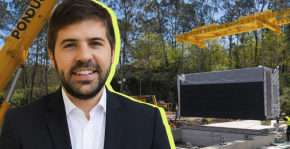
Flávio Cardoso, CEO of Zethaus, the 100% industrialized division of dstgroup, in an interview.
It is now possible to erect a building’s structure in 24 hours, all thanks to industrialization. This new way of building is transforming the real estate and construction sectors across Europe, and Portugal is no exception to this trend. At a time when the lack of supply has become one of the main problems and root causes of the housing crisis, and when traditional models are no longer sufficient to meet market needs, industrialized construction could change everything—in housing and other sectors. This is the conviction of Flávio Cardoso, CEO of Zethaus, the 100% industrialized arm of dstgroup. For him, this is truly “a path of no return.”
In a context marked by a shortage of housing supply, pressure on construction costs, and the need to speed up project timelines, the government recently launched a new tax package for housing. At the same time, it revealed that it is working with Parliament on a new law to boost modular and industrialized construction—specifically to scale up a sector it considers essential for reducing costs and accelerating the execution of housing projects.
Engineers and architects point precisely to the lack of scale and price predictability as the main challenges to the widespread adoption of this model. However, for Flávio Cardoso, the central issue is actually the opposite—that is, the predictability of demand. According to him, for the industry to invest in these types of solutions and develop production capacity, a long-term vision with a “consistent project portfolio” is essential.
Even so, real estate developers seem increasingly aware of the advantages of these solutions, especially in segments such as multi-family housing, student housing, hotels, and senior living facilities. But is Portugal ready to take the leap toward the industrialization of construction? The Zethaus executive believes that the country “is riding the wave” and that this model is beginning to establish itself as the answer for the future of the real estate sector.
Compared to other European countries, where does Portugal stand in terms of industrialized construction?
I would say that Portugal is currently “riding the wave.” There is a very strong international movement toward industrialized solutions, and the DST Group began working in this area nearly a decade ago. This allowed us to get an early start on this transformation that is taking place throughout Europe.
We believe this is a path of no return, because traditional models can no longer meet current needs—not only in housing but also in other sectors.
We believe this is a path of no return, because traditional models are no longer able to meet current needs
In a recent discussion, architects and engineers noted that developers are increasingly seeking to incorporate industrialized construction into projects from the very beginning. Even so, they pointed to the lack of scale and price predictability as one of the main challenges. Do you agree?
I would say exactly the opposite: industrialized models allow for greater cost predictability. But for that to happen, it’s essential that companies like ours get involved right from the early stages of the process.
It’s important that buildings be designed from the ground up for this type of solution. The earlier we get involved in the project’s development, the greater the positive impact in terms of price, efficiency, and speed of execution.
There is a lot of talk about industrialized construction as a possible solution to increase the housing supply and even help with affordable housing. What’s missing to achieve scale?
The main challenge is ensuring predictability in demand. For the industry to invest in more automated and robotized solutions, it needs a long-term vision and a consistent project portfolio. If we’re working only on isolated projects, without continuity, it becomes more difficult to achieve true economies of scale and significantly reduce costs.
The government recently announced measures to boost modular and industrialized construction. From the perspective of those on the ground, what can the government do to accelerate this sector?
There are interesting examples in other countries, such as the United Kingdom. There, programs have been launched targeting areas with the greatest needs—such as hospitals or housing—encouraging industrial companies to develop replicable and scalable solutions. This type of strategy creates stability and predictability for the industry to invest and develop production capacity.
What kind of projects are you currently involved in?
We are currently finishing a student residence that was completed in about six months, from contract award to completion, including design and construction. This alone demonstrates the difference compared to traditional methods. A timeline like this would be practically impossible in conventional construction.
In addition, we have been working not only on fully industrialized buildings but also on subsystems, such as facades, kitchens, and modular bathrooms. We have already produced more than 16,000 units of these systems.
Would it be possible to apply this model to residential housing?
Without a doubt. We’re working with a product-based approach, in which buildings remain customized but result from the combination of pre- ly studied and production-ready solutions. This allows us to significantly accelerate both the design and construction phases.
In the case of the student residence, for example, the modules arrived from the factory virtually complete, and the building was assembled in less than 24 business hours.
Are real estate developers already aware of this type of construction?
Yes, we’re currently seeing very significant demand. Developers realize that industrialized construction can represent a turning point in the sector and a more effective response to market needs. The greatest demand has come primarily from multi-family housing, hotels, student housing, and senior living facilities.